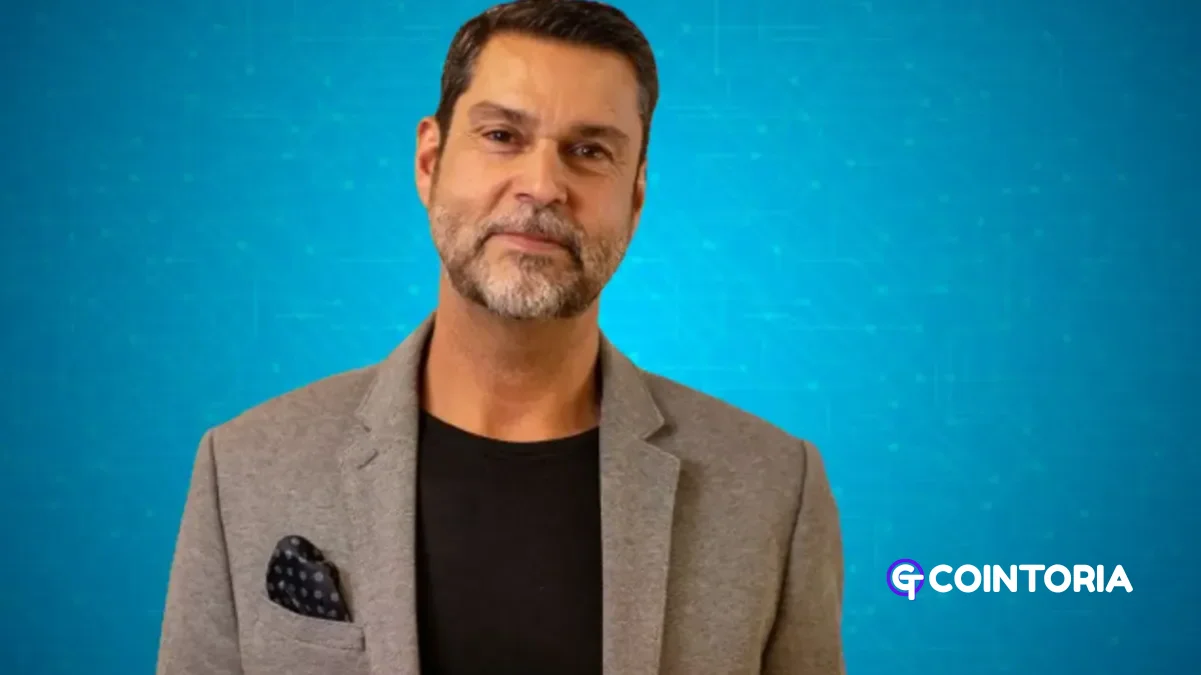
A new institutional thesis from Raoul Pal is reframing how markets view blockchain adoption, arguing that major global banks are preparing to move clearing, settlement, and custody operations onto Ethereum within the next 12 to 18 months.
The claim, outlined in his report “The Institutional Flippening: The Post-Trade Revolution,” suggests a structural shift in financial infrastructure rather than another cycle of crypto speculation.
Wall Street is moving onchain. The question isn’t if. It’s which infrastructure wins.
I sat down with @VivekVentures and @dannyryan from Etherealize to talk about Ethereum’s role in tokenization, stablecoins, AI agents, and the regulatory path ahead. As ever, please enjoy! pic.twitter.com/T0Abrqbpy6
— Raoul Pal (@RaoulGMI) April 16, 2026
A $4.2 Trillion Liquidity Projection
At the center of Pal’s thesis is a projection that $4.2 trillion in tokenized asset liquidity could flow onto Ethereum by 2027.
Markets reacted quickly. ETH rose 9.2% in pre-market trading on Wednesday, while tokens tied to banking infrastructure and Ethereum ecosystems posted double-digit gains.
The response indicates that traders are treating the report not just as commentary, but as a potential signal of institutional positioning.
Why Post-Trade Infrastructure Matters
For context, post-trade systems handle clearing, settlement, and custody—the back-end processes that ensure financial transactions are completed and recorded.
These systems are foundational to global markets but have historically relied on fragmented, legacy infrastructure.
Pal argues that public blockchain networks, particularly Ethereum, offer a unified settlement layer capable of replacing these siloed systems.
ISO 20022 as the Bridge to Blockchain
A key component of the thesis is the rollout of ISO 20022, a global standard for interbank communication.
Pal suggests this standard enables compatibility between traditional banking systems and blockchain networks, particularly the Ethereum Virtual Machine.
If interoperability barriers are removed, the incentive to maintain parallel legacy systems diminishes significantly.
Project Guardian Signals Operational Shift
Pal points to Project Guardian as evidence the transition is already underway.
The initiative, led by the Monetary Authority of Singapore in partnership with JPMorgan Chase and DBS Bank, has moved beyond theory into live experimentation.
According to the report, these pilots have encouraged Tier-1 bank technology teams to begin testing Ethereum Layer-2 solutions for handling institutional-scale transaction throughput.
Institutional Commitment Is Growing
The shift is also reflected in industry participation. Membership in the Enterprise Ethereum Alliance reportedly rose 40% in Q1 2026.
Such growth suggests deeper engagement from financial institutions, including engineering and compliance teams—not just exploratory interest.
This level of involvement typically signals preparation rather than experimentation.
Why Private Blockchains Fell Short
For years, banks invested heavily in private blockchain systems such as Hyperledger and Corda.
Pal argues these efforts failed to scale because isolated networks create fragmented liquidity. Without a shared public layer, tokenized assets cannot move efficiently between counterparties.
In contrast, Ethereum’s public infrastructure—supported by Layer-2 scaling—offers both interoperability and liquidity aggregation.
Market Psychology: From Skepticism to Repricing
The market’s reaction reflects a subtle shift in perception. Previous crypto cycles were largely driven by retail speculation.
This narrative centers on institutional infrastructure, a fundamentally different driver.
However, skepticism remains. Moving from pilot programs to full-scale migration involves regulatory, operational, and risk management challenges that are far from resolved.
What Comes Next for Ethereum and Banks
The timeline—12 to 18 months—will be closely watched. Key indicators include regulatory clarity in the U.S. and Europe, expansion of pilot programs, and further integration of ISO 20022 frameworks.
Even if the timeline extends, the direction of travel appears increasingly defined: financial institutions are exploring public blockchain infrastructure at a deeper level than in previous cycles.
Raoul Pal’s thesis positions Ethereum at the center of a potential transformation in global finance, where post-trade infrastructure migrates to public blockchain networks. While execution risks remain, growing institutional engagement suggests the shift from experimentation to implementation may already be underway.
Disclaimer: The information in this article is provided for informational and editorial purposes only and does not constitute financial, investment, trading, or legal advice. You should not rely on this content as a recommendation to buy, sell, or hold any cryptocurrency or other asset. Always conduct your own research and, if necessary, consult a qualified financial advisor before making investment decisions. CoinToria Media and its authors are not responsible for any loss or damage resulting from the use of this information.