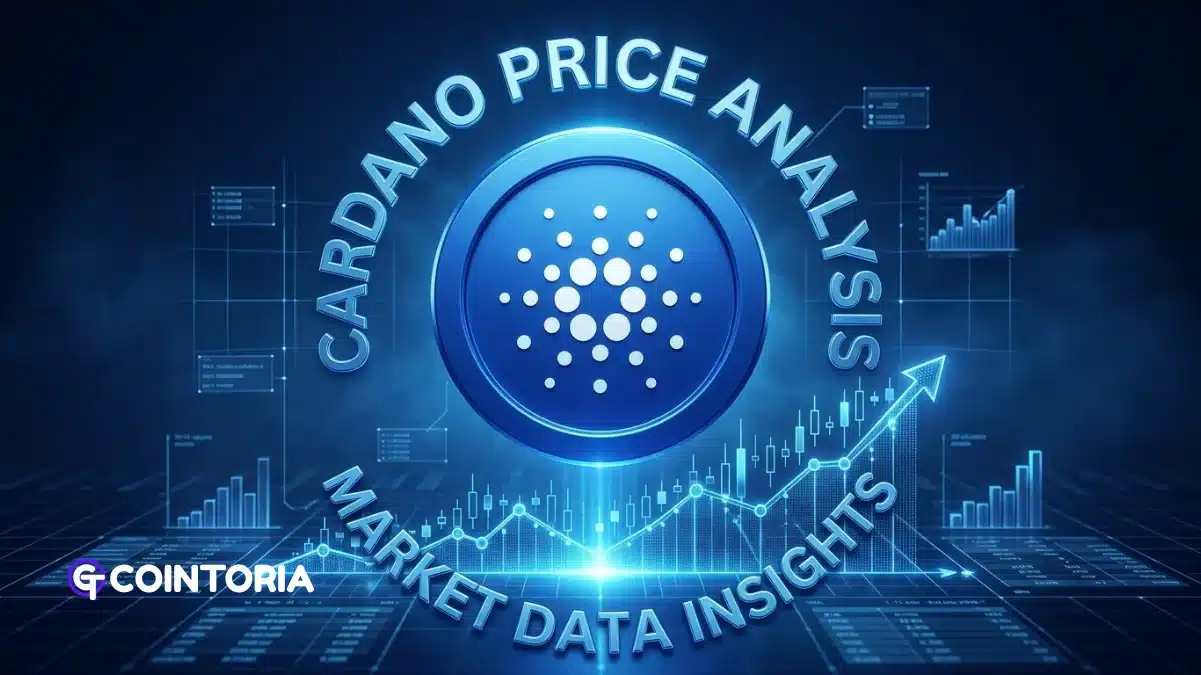
Cardano is underperforming in a market where several altcoins are showing renewed strength, raising questions about why its price action remains muted despite ongoing development. The latest Cardano price analysis highlights a widening gap between network progress and market performance.
While major assets like Bitcoin and Ethereum are stabilizing above key levels, ADA continues to trade near multi-year lows, slipping behind peers in both momentum and capital inflows.
Capital Rotation Bypasses Cardano
The broader crypto market is showing signs of selective capital rotation.
As Bitcoin consolidates, liquidity is flowing into high-beta and narrative-driven assets—particularly those tied to AI, memecoins, and emerging Layer-1 ecosystems. In contrast, Cardano has struggled to attract similar attention.
Despite multiple attempts, ADA has failed to break above the $0.30 resistance level, with each rally showing weak follow-through. This suggests that buyers are not committing capital at the same scale seen in other altcoins.
Fundamentals Improve, But Price Lags
Cardano’s underperformance is notable given its ongoing ecosystem developments.
Recent upgrades, governance improvements, and real-world adoption initiatives point to steady on-chain progress. However, this growth has not translated into price momentum.
This divergence reflects a broader market trend where narratives and short-term catalysts often outweigh fundamentals in driving capital flows.
Technical Structure Signals Continued Weakness
From a structural perspective, ADA remains in a fragile position.
The price is forming a series of lower highs, indicating declining buying strength. At the same time, repeated rejections near $0.30 confirm strong overhead resistance.
Momentum indicators reinforce this outlook. The Chaikin Money Flow (CMF) remains negative, pointing to sustained capital outflows, while trading volume continues to decline—suggesting limited participation from buyers.
The Bollinger Bands show price compressing near the lower range, a setup that can precede either a short-term bounce or further downside.
Key Support Levels Under Pressure
Cardano is currently trading within a well-defined range between $0.22 and $0.26, a zone that has acted as multi-year support since 2023.
This level has been tested multiple times, making it a critical area for market stability. However, repeated tests can weaken support over time, increasing the risk of a breakdown if buying interest does not improve.
On the upside, $0.30 remains the key resistance level. Until ADA can reclaim this zone with stronger volume, the broader structure is likely to remain under pressure.
Market Psychology: Narrative Over Fundamentals
The current market environment is heavily influenced by narratives.
Assets tied to trending sectors are capturing liquidity, while projects with slower, fundamentals-driven growth—like Cardano—are receiving less attention.
This shift highlights a key dynamic in crypto markets: capital often flows toward perceived opportunity rather than underlying development progress.
As a result, ADA’s lagging performance may reflect not just technical weakness, but also a lack of compelling short-term catalysts.
What Comes Next for Cardano
Looking ahead, Cardano’s trajectory will depend on whether it can attract renewed capital inflows.
Holding above the $0.22–$0.26 range could provide a foundation for stabilization, but a meaningful shift in momentum would require stronger volume and sustained buying interest.
A move toward $0.30 would signal improving conditions, though resistance remains significant. Without that shift, ADA may continue to trade within its current range.
Analytical Takeaway
This phase of Cardano price analysis underscores a disconnect between development progress and market performance. While the network continues to evolve, price action remains constrained by weak momentum and limited capital inflows.
In the current environment, Cardano’s ability to regain relevance may depend less on fundamentals alone and more on whether it can re-enter the narratives driving the broader altcoin market.
Disclaimer: The information in this article is provided for informational and editorial purposes only and does not constitute financial, investment, trading, or legal advice. You should not rely on this content as a recommendation to buy, sell, or hold any cryptocurrency or other asset. Always conduct your own research and, if necessary, consult a qualified financial advisor before making investment decisions. CoinToria Media and its authors are not responsible for any loss or damage resulting from the use of this information.