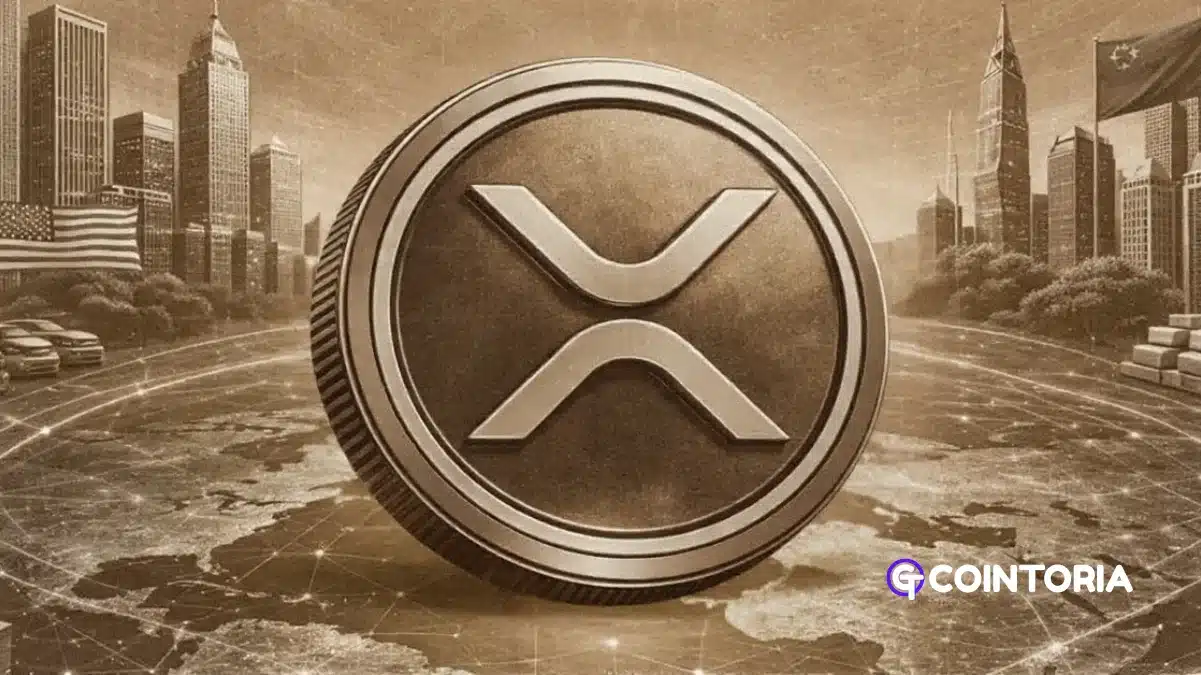
The XRP price outlook is under renewed scrutiny as the token continues to drift lower, with limited signs of a near-term recovery. While market sentiment has softened, one prominent voice in the community is urging participants to shift attention away from short-term price action and toward the broader structural narrative developing around the asset.
A pseudonymous analyst known as @UnknowDLT has called for patience, arguing that current market weakness may not fully reflect the long-term trajectory of XRP or the infrastructure surrounding the XRP Ledger.
Short-term pressure meets long-term narrative
Recent price declines have created unease among traders, particularly as volatility persists without a clear directional trend. The absence of a strong rebound has amplified uncertainty, a common dynamic during extended consolidation or bearish phases.
According to @UnknowDLT, however, focusing exclusively on short-term price movement risks overlooking a larger shift tied to institutional finance and blockchain integration.
I still don’t understand why people are so desperate and fretting every day about the price of XRP when you know that an institution like the DTCC is going to move its entire volume ($3.8 quadrillion) to efficient blockchains like the XRP Ledger, and that even if it captures just…
— {x} (@unknowDLT) April 6, 2026
The analyst points to the scale of global financial infrastructure as a reference point—specifically the role of the Depository Trust & Clearing Corporation (DTCC), which processes vast volumes of transactions across traditional markets.
Institutional flows as a long-term catalyst
The argument centers on the potential for blockchain networks, including XRPL, to capture a portion of institutional transaction flows. Estimates cited by the analyst suggest that DTCC-related activity could eventually involve as much as $3.8 quadrillion across interconnected systems.
Even a relatively small allocation—around 5% to 10%—directed through blockchain rails like XRPL is framed as a scenario that could materially alter network activity and liquidity dynamics.
While such projections remain hypothetical, they reflect a broader industry thesis: that tokenized finance and blockchain settlement could gradually integrate with existing financial systems rather than replace them outright.
Community sentiment reveals growing divide
Despite the long-term framing, reactions within the XRP community highlight a widening gap between optimism and frustration.
Some participants argue that the lack of a clear upward trend has eroded confidence, particularly among holders who have maintained positions over multiple market cycles. For these investors, time without visible progress can weigh heavily on sentiment.
Others point to a recurring pattern of elevated expectations driven by influencer forecasts, followed by market pullbacks. This cycle has contributed to skepticism, with some users questioning whether widely discussed upside scenarios are realistic within current market conditions.
The result is a mixed psychological landscape: long-term believers remain focused on adoption narratives, while shorter-term participants increasingly demand tangible market performance.
Ripple’s institutional strategy in focus
Beyond theoretical flows, the analyst also highlights ongoing developments tied to Ripple, the company closely associated with XRP and a significant holder of its supply.
Ripple’s engagement with major financial institutions—including partnerships with Tier 1 banks—continues to be positioned as a key pillar of XRP’s long-term use case. These relationships are often cited as evidence of real-world integration potential, particularly in cross-border payments and liquidity provisioning.
However, translating partnerships into measurable on-chain activity remains a critical factor that market participants continue to monitor.
Market structure and expectations
From a broader market perspective, XRP’s current phase reflects a familiar pattern seen across digital assets: a disconnect between narrative development and price realization.
Infrastructure, partnerships, and institutional interest often evolve gradually, while market pricing tends to react in shorter cycles driven by liquidity, sentiment, and macro conditions.
This mismatch can create periods where fundamentals appear to strengthen even as price action remains subdued.
Looking ahead: convergence or continued divergence?
The ongoing debate around XRP underscores a central question for the crypto market: when—and how—does institutional adoption translate into sustained market impact?
If blockchain networks like XRPL begin to capture meaningful transaction volume from traditional finance, the implications could extend beyond XRP to the broader digital asset ecosystem.
At the same time, uncertainty remains around timelines, regulatory frameworks, and the pace of integration between legacy systems and decentralized infrastructure.
For now, XRP’s trajectory reflects both sides of that equation—a developing long-term thesis set against a cautious and often impatient market environment.