
Bitcoin remains locked in a prolonged consolidation phase, but rising geopolitical tensions are beginning to reshape the outlook. The latest Bitcoin price prediction suggests that macro-driven risk factors could push BTC toward lower levels if volatility intensifies.
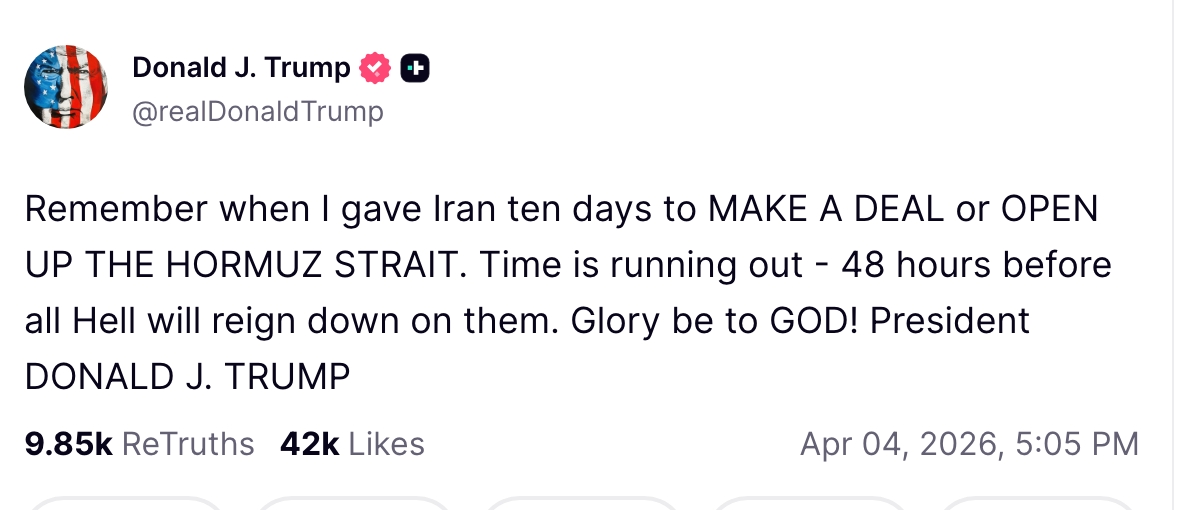
The market reaction follows escalating rhetoric from Donald Trump regarding Iran, with a stated deadline approaching that could influence global risk sentiment.
Geopolitical Pressure Builds Ahead of Key Deadline
Bitcoin slipped by around 0.50% on April 5, continuing to trade within a narrow range that has persisted for several months.
However, attention is shifting toward macro developments. Trump’s recent statement warning Iran to reach a deal or face severe consequences has introduced a new layer of uncertainty into global markets. The deadline for this ultimatum is expected early this week.
Analysts suggest that any escalation could disrupt energy markets, particularly in critical regions such as the Strait of Hormuz—an essential route for global oil supply.
Oil Prices and Inflation Add to Market Stress
The potential for supply disruptions is already being reflected in energy markets.
Data from Polymarket shows crude oil perpetual futures rising sharply in recent weeks. West Texas Intermediate (WTI) prices have climbed to $112, surpassing Brent crude for the first time in years, while gasoline prices have moved above $4 per gallon.
Higher energy costs are expected to feed into inflation. The Organisation for Economic Co-operation and Development projects consumer inflation could reach 4.2% this year, adding pressure on central banks.
Risk-Off Sentiment Emerges Across Markets
The broader impact is a shift toward risk aversion.
The Crypto Fear and Greed Index has fallen to 20, indicating extreme fear among market participants. In such environments, investors typically reduce exposure to risk assets, including cryptocurrencies.
At the same time, strong labor market data in the United States—showing 178,000 jobs added and unemployment at 4.3%—may limit the ability of the Federal Reserve to ease monetary policy.
Higher interest rates combined with geopolitical uncertainty create a challenging backdrop for Bitcoin and other digital assets.
Technical Structure Points to Potential Breakdown
From a technical perspective, Bitcoin’s price action is showing signs of weakness.
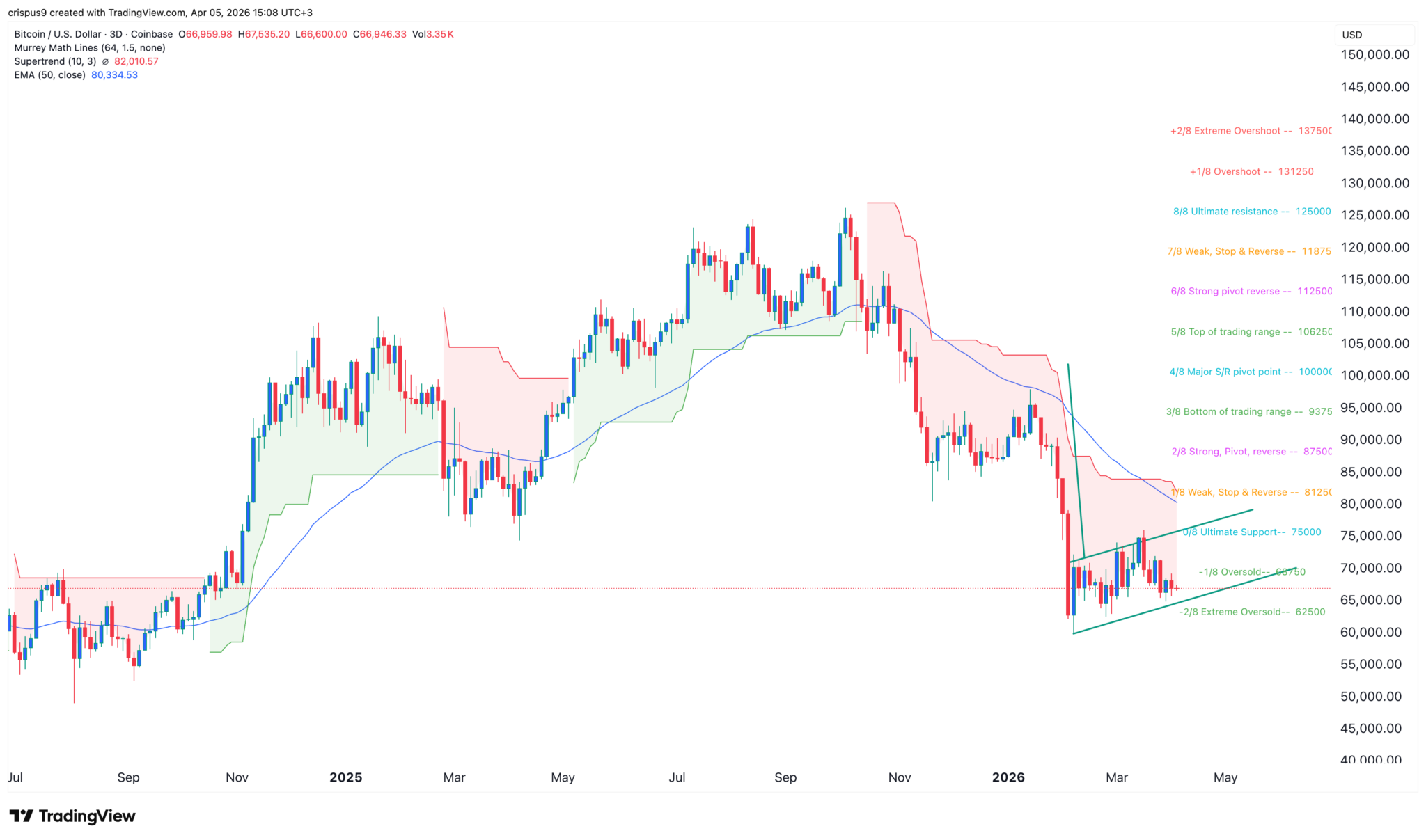
The formation of a bearish flag pattern on higher timeframes suggests that the current consolidation could resolve to the downside. This structure began after BTC declined from $95,000 in January to around $60,000 in February.
Since then, price has been moving within the flag portion of the pattern—a phase typically associated with continuation before another directional move.
Additional indicators reinforce this outlook. Bitcoin is trading below key moving averages, while the Supertrend indicator signals ongoing bearish control.
Key Levels Define the Next Move
If bearish momentum continues, the $60,000 level emerges as a key area of interest, aligning with previous downside extremes and technical support zones.
On the upside, a move above $75,000 would challenge the current structure and suggest a shift in momentum. Until such a move occurs, the broader setup remains cautious.
Market Psychology: Macro Over Technicals
The current environment highlights the growing influence of macroeconomic factors on crypto markets.
While technical patterns provide structure, geopolitical developments and inflation expectations are increasingly shaping investor behavior.
The shift toward risk-off sentiment suggests that traders are prioritizing capital preservation, reducing exposure during periods of uncertainty.
What Comes Next for Bitcoin
Bitcoin’s next move will likely depend on how global events unfold in the coming days.
An escalation in geopolitical tensions could reinforce downside pressure, while stabilization in energy markets may ease concerns. At the same time, monetary policy expectations will continue to play a key role in shaping sentiment.
Analytical Takeaway
This phase of Bitcoin price prediction reflects a market caught between technical weakness and macro uncertainty. While BTC remains in consolidation, external pressures—from geopolitics to inflation—are increasing the likelihood of a directional move.
As conditions evolve, Bitcoin’s response will offer insight into how resilient the crypto market is in the face of broader global risk.
Disclaimer: The information in this article is provided for informational and editorial purposes only and does not constitute financial, investment, trading, or legal advice. You should not rely on this content as a recommendation to buy, sell, or hold any cryptocurrency or other asset. Always conduct your own research and, if necessary, consult a qualified financial advisor before making investment decisions. CoinToria Media and its authors are not responsible for any loss or damage resulting from the use of this information.